Case study · Wayfair · 2020
Wayfair integrations self-service
Three times more successful integrations, completed 78% faster.
Tap or click any image to see it larger.
3×
Quarterly integrations
40 → 9hrs
Time to integrate
23 → 0
Systems updated by hand
- My role
- Embedded designer: drove research with Supplier Support and designed every flow and screen
- Worked with
- Engineering, Supplier Support, Operations, Product
- Disciplines
- Product design, UX design, UX research, Visual design
My part
I was the designer embedded with a small team of engineers, several representatives from the Supplier Support team, an Operations partner, and a Product Owner. I worked with Supplier Support to drive research and collaborated with the engineers on ideas and feasibility. I created all the flows and final designs.
The problem
The original focus of this work was to make API and EDI integrations easier, but research changed our direction. Over 80% of suppliers that integrate with Wayfair are “manual” suppliers. These suppliers were forced through a complex process intended for API and EDI integrations, which bogged down Supplier Support. Additionally, Supplier Support had to manually translate the output of the questionnaire across 23 separate backend systems.
80% “One size fits all” questionnaire was hurting 80% of suppliers trying to integrate
The work
I began by working with Supplier Support to identify suppliers who had recently completed the integration flow and scheduled research interviews with them. Through these conversations, the team learned that 80% of suppliers would eventually be classified as “manual” suppliers-meaning they would use the Supplier Portal to manage orders, inventory, and shipping, rather than complicated API or EDI integrations. This allowed us to focus on manual suppliers for the greatest effect.
Starting with self selection
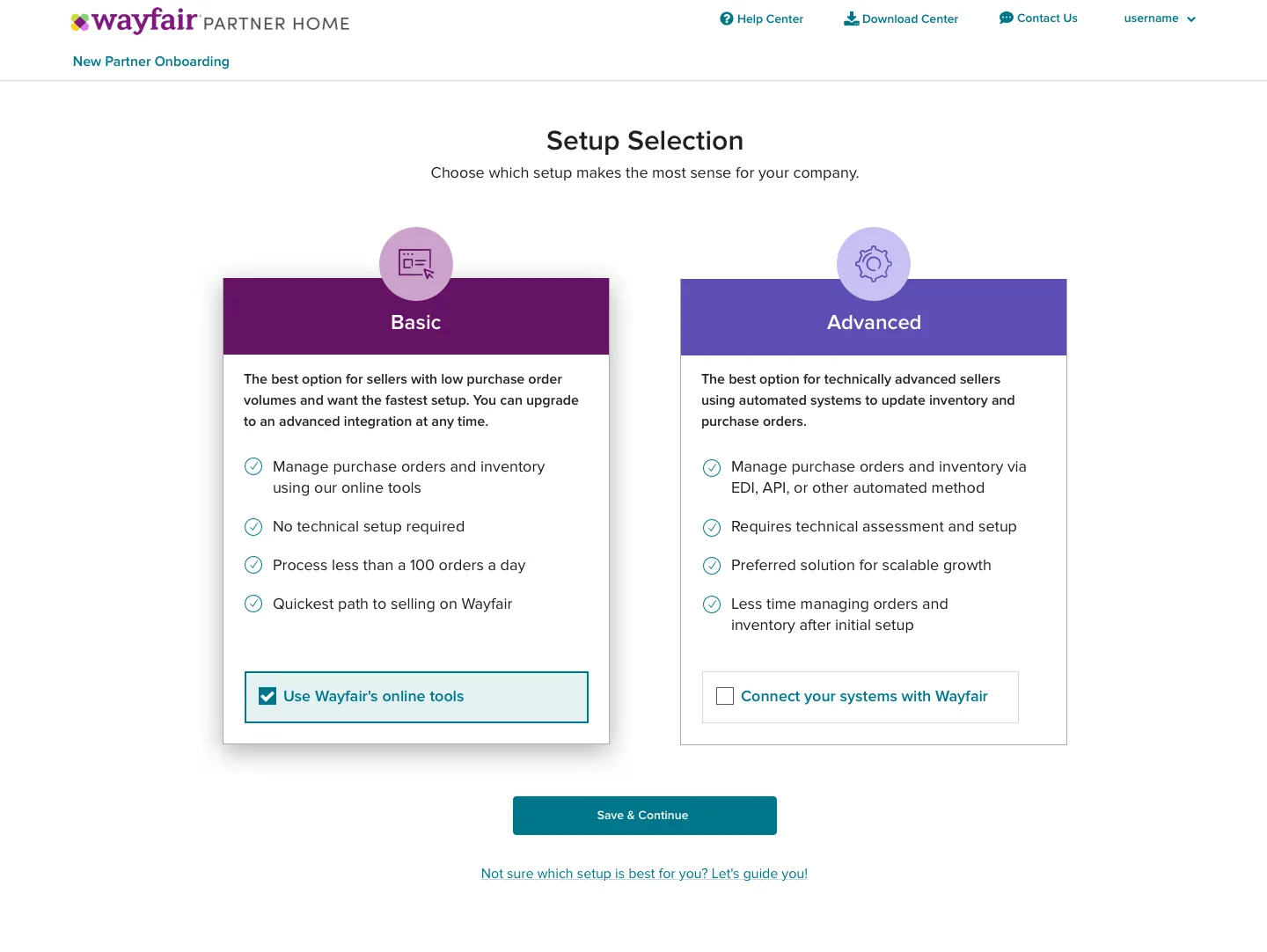
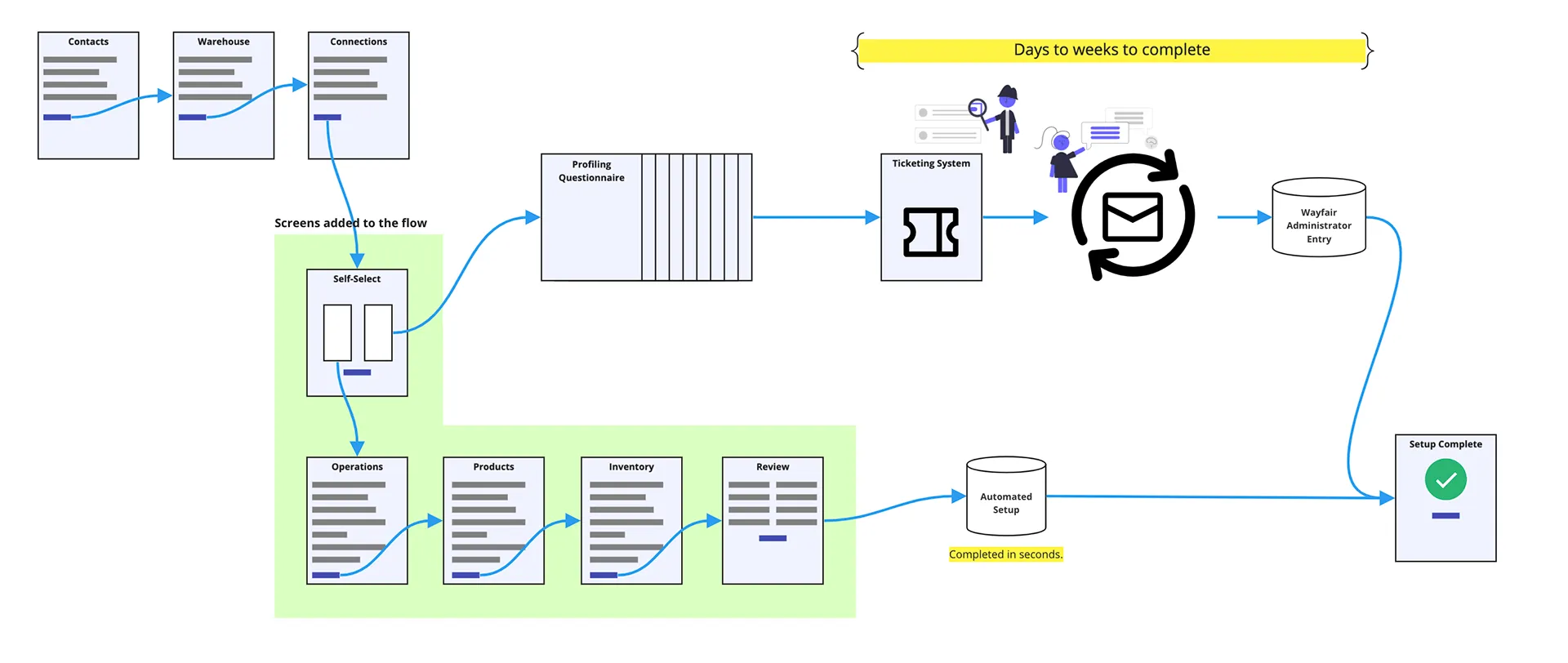
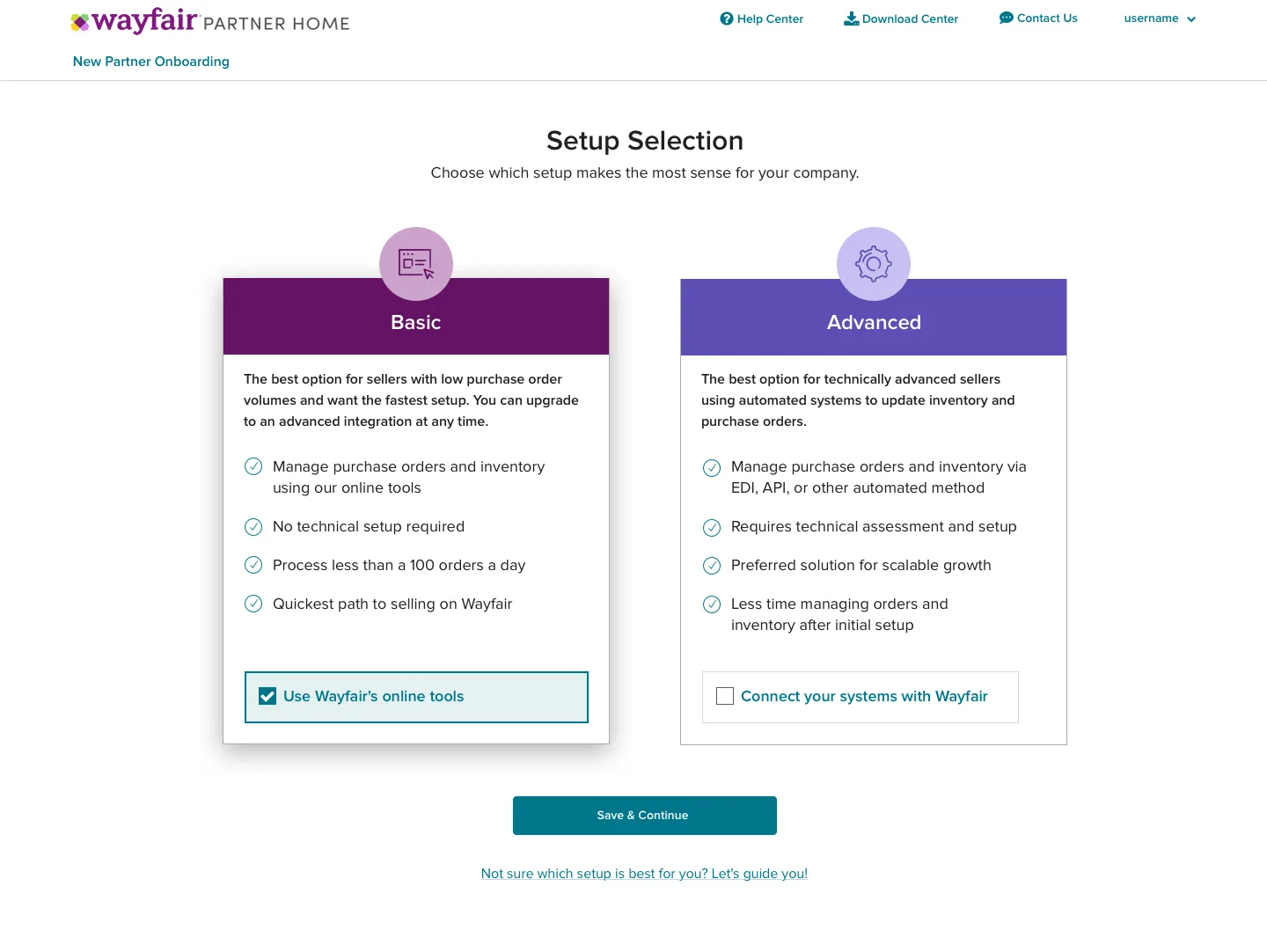
We added a screen to the flow that would allow our suppliers to self-select their setup. Suppliers who selected ‘Basic’ were set up as manual suppliers, while those who selected ‘Advanced’ went through the previous questionnaire experience.
Automating the setup
By eliminating the Profiling Questionnaire and allowing suppliers to self-select, we focused the questions on items that would add the correct data and settings to the system. This eliminated the need for Wayfair Administrators to manually enter data.
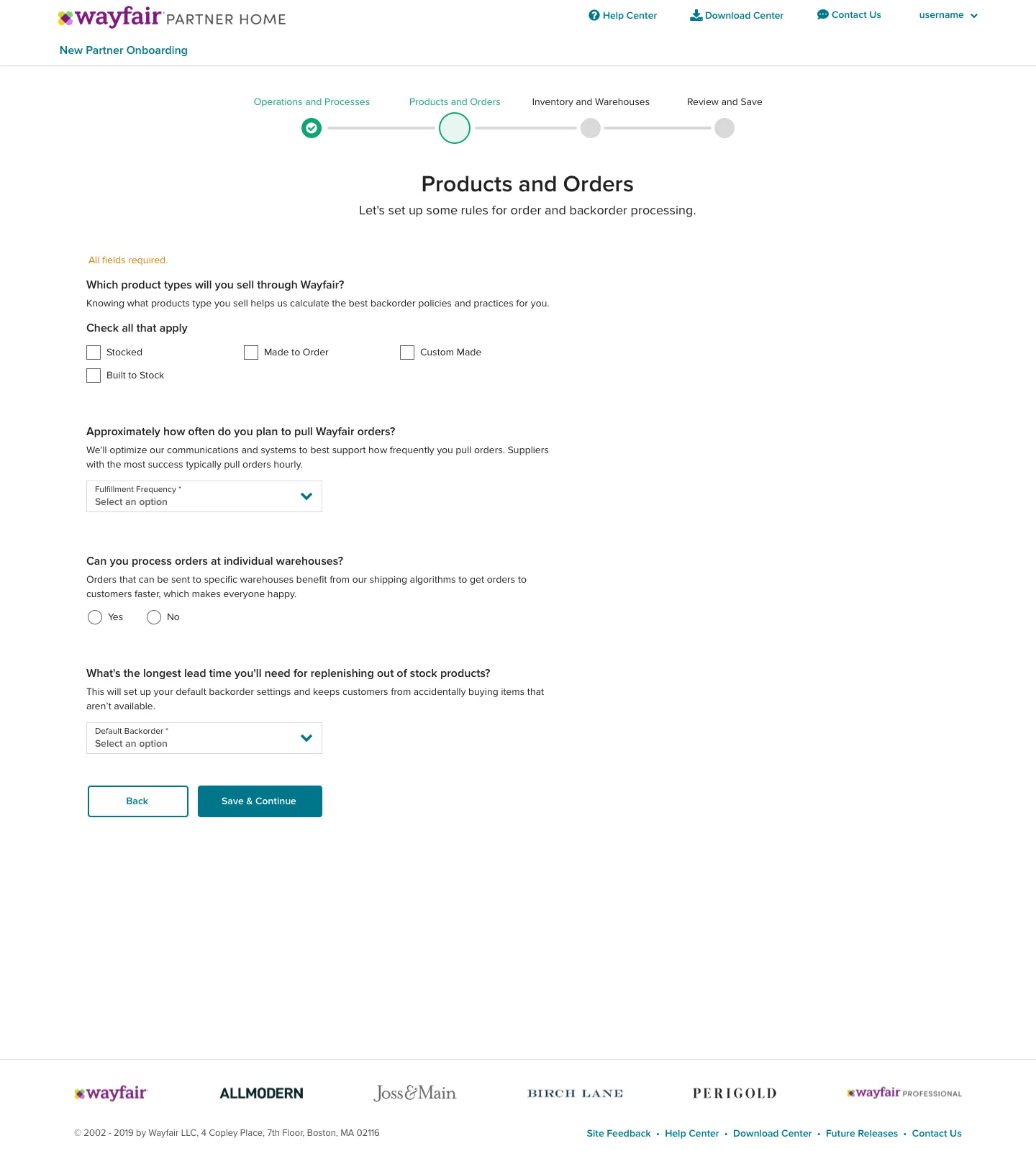
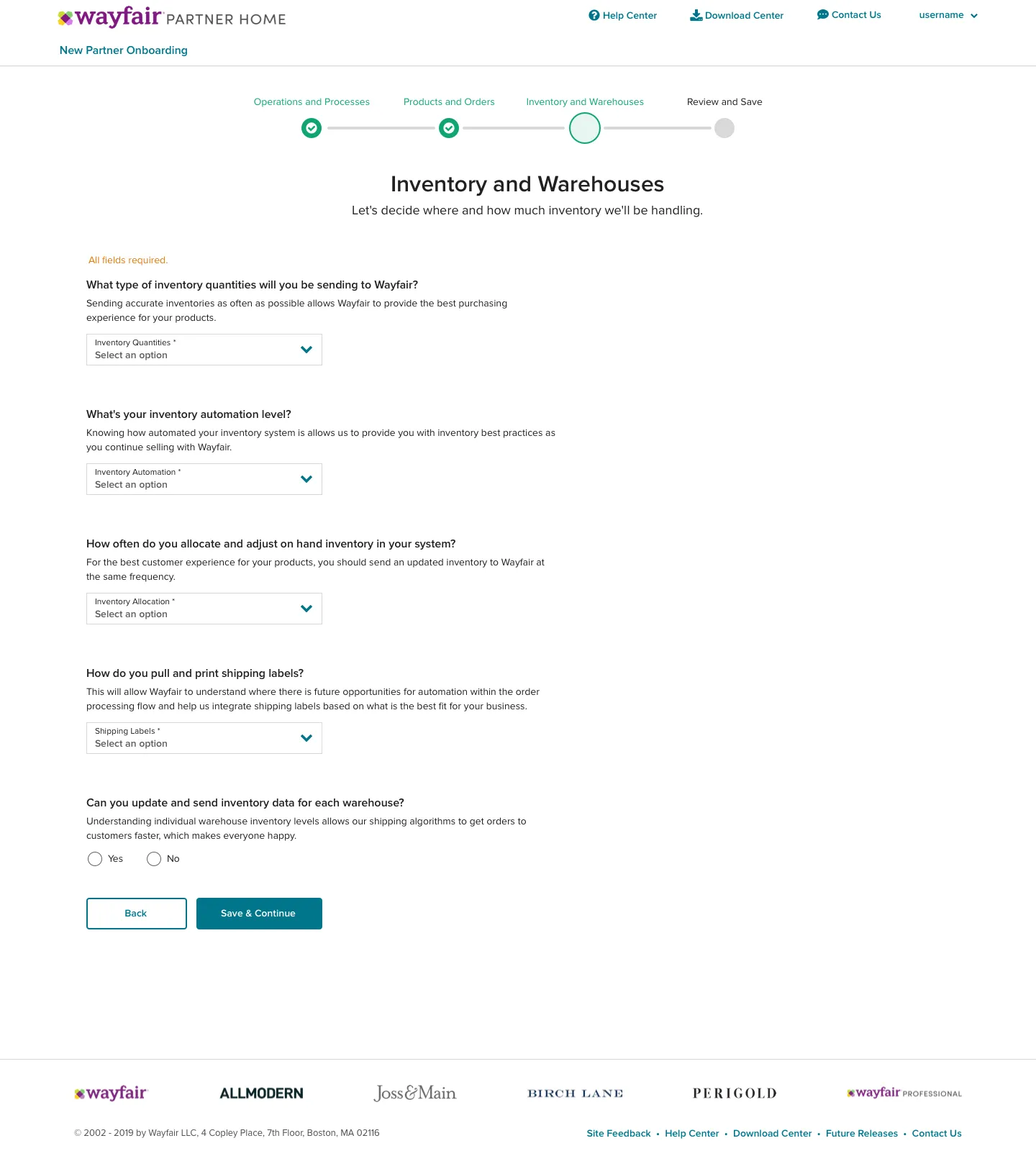
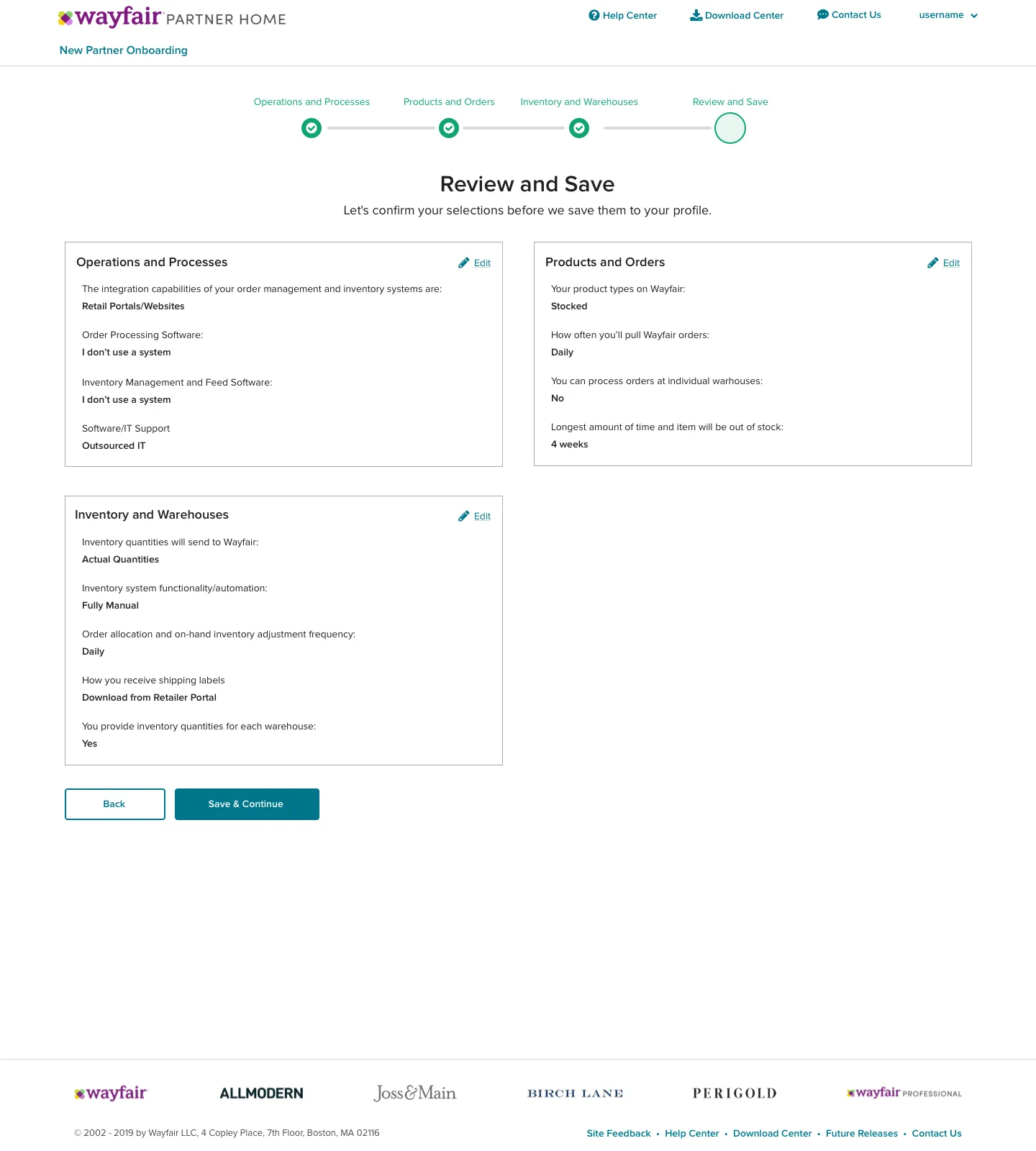
Visual design and screens
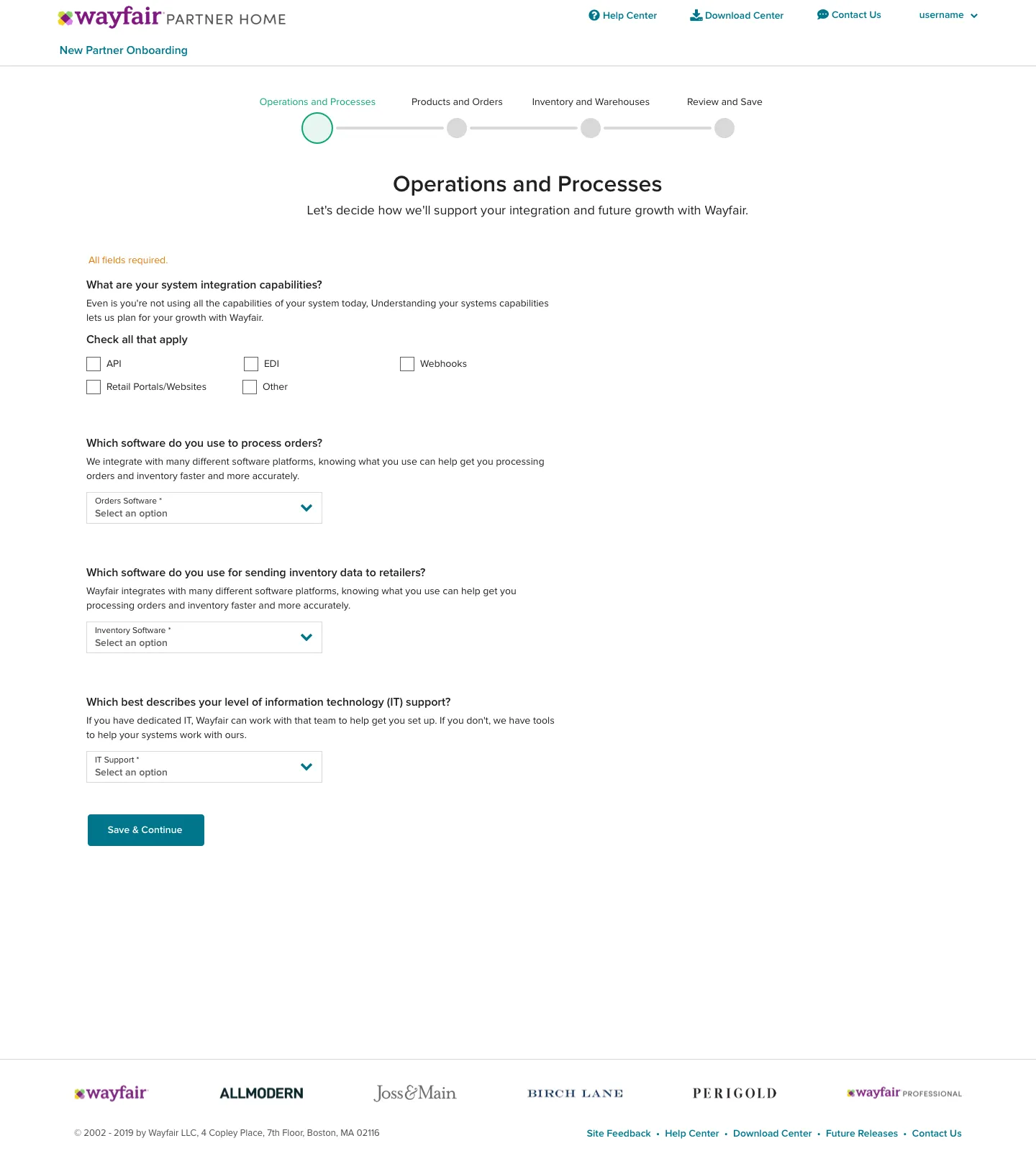
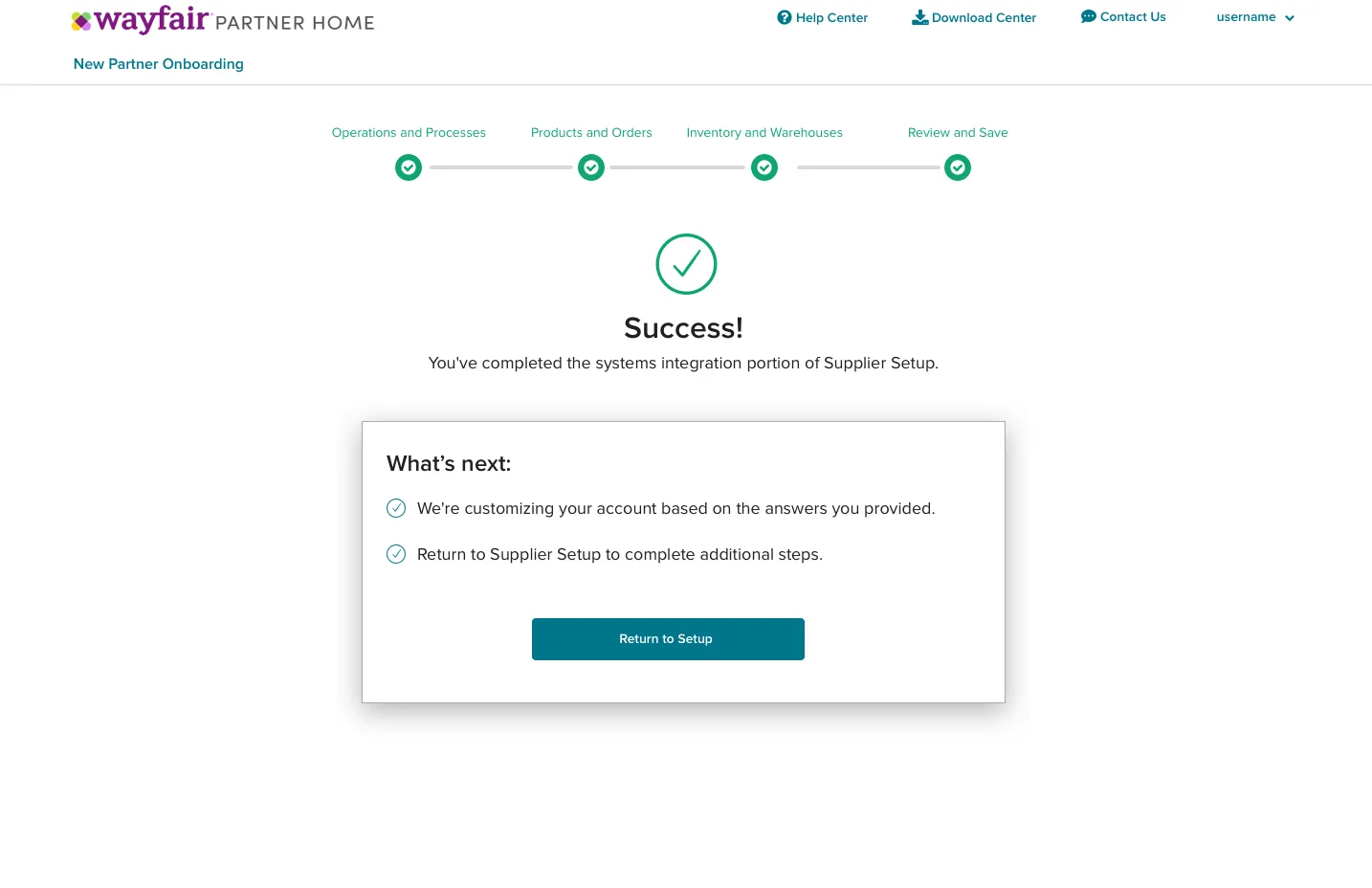
The visual design in Supplier Setup was one of many fragmented design areas at Wayfair. The technology stack was also outdated, preventing us from leveraging Wayfair’s standard design language. I created a compromise to bridge the gap between the multiple visual design iterations that a supplier would see. This was addressed more fully in a later Supplier Onboarding project.
Outcomes
After launch, successful setups increased to more than three times the number achieved with the previous process. The time required for a supplier to complete the process and become active dropped by 78%, from 40 hours to 9 hours.
The success of the design also removed the need for Wayfair Administrators to perform any actions for manual suppliers and allowed them to focus on API and EDI integrations, increasing velocity on those integrations as well.
- Increased quarterly integration volume 3x
- Reduced integration time for manual suppliers by 78%
- Reduced associate hours to support integrations by 80 hours per week
- Replaced manual data entry with automated data flow into the appropriate backend systems.

Hindsight
Making API and EDI integrations easier would have been extremely complex and time-consuming. It also would have had very little impact. We didn’t know that when we started.
Without research, we would have solved the wrong problem entirely and failed as a team. By conducting research and having the whole team think critically about the outcome-helping suppliers start selling faster-we were led to a better, easier, faster, and more effective solution.