Case study · Wayfair · 2022
Wayfair supplier onboarding
58% faster onboarding, abandonment cut in half.
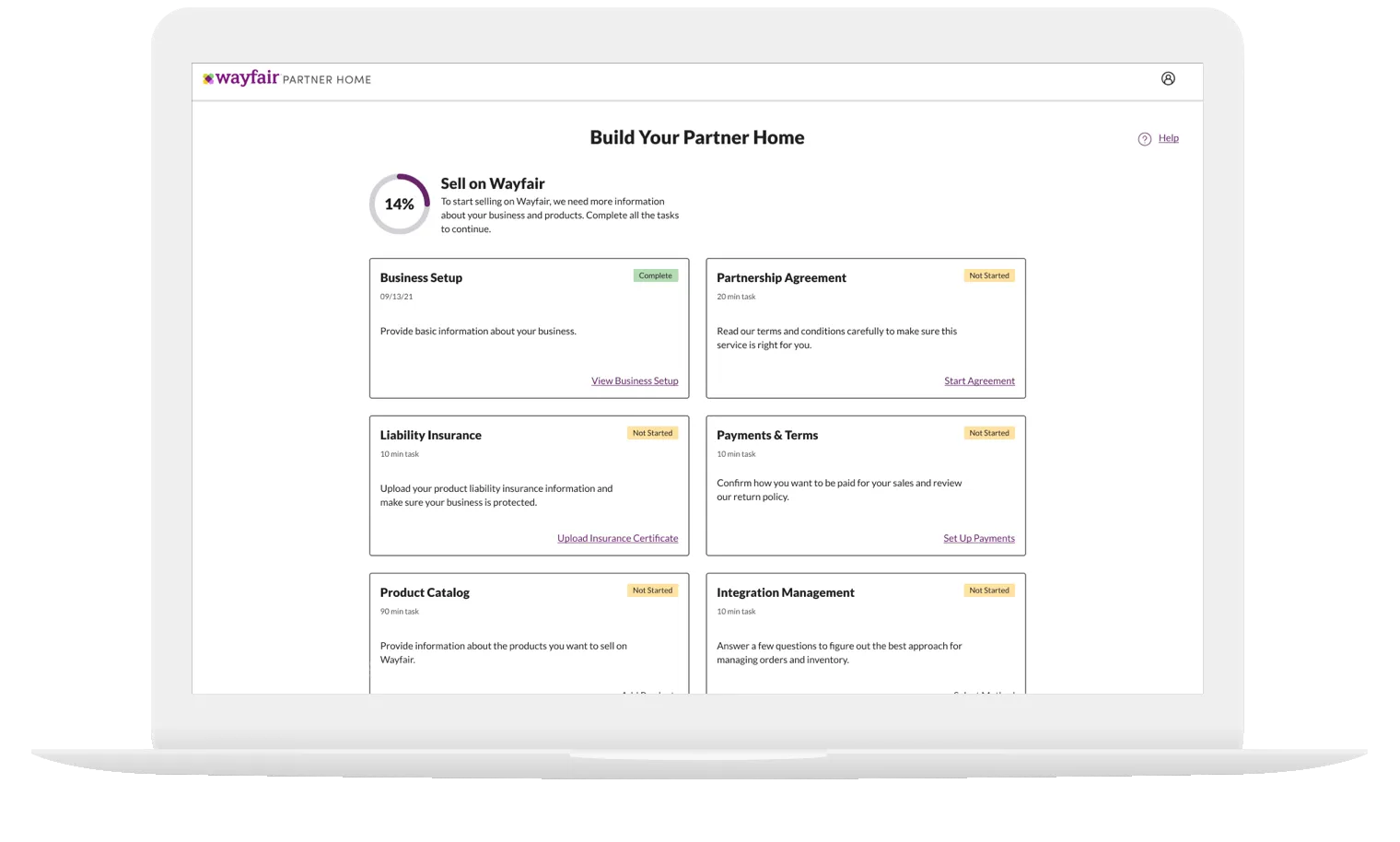
Tap or click any image to see it larger.
58%
Faster to onboard
37 → 18%
Abandonment rate
80hrs/wk
Support time saved
- My role
- Led four designers and stayed hands-on in research, mapping, wireframes and visual design
- Worked with
- Product, Engineering, Supplier Support
- Disciplines
- Product design, Service design, UX design, UX research, Visual design
My part
I managed a team of four designers, assigning areas of work and expected outcomes. I led and facilitated cross-functional collaboration to ensure feasibility and delivery. I was also hands-on throughout the project, conducting interviews, working through experience mapping, creating and testing wireframes, and finalizing visual design.
The problem
The onboarding experience for suppliers was complex, fragmented, and confusing. It was a mix of self-service and associate-supported processes, without useful tracking or visibility into the process. When we looked at the metrics, we learned that this complexity and friction caused a high abandonment rate among potential suppliers. Those who remained in the process took over 40 days to get onboarded.
42 Days to complete onboarding
37% Suppliers abandoned
The work
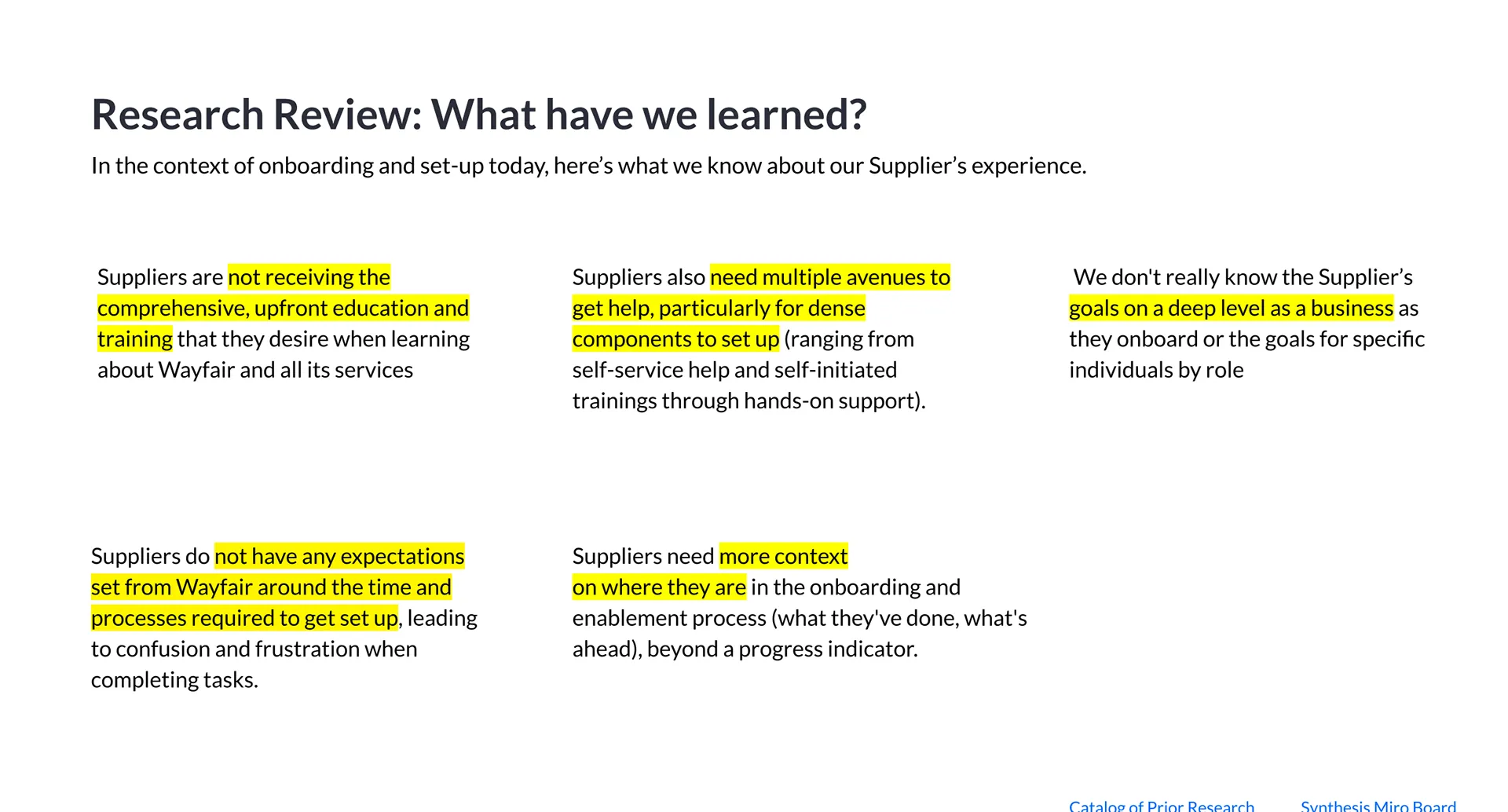
The team went through different levels of research to ensure we were targeting the right areas to improve.
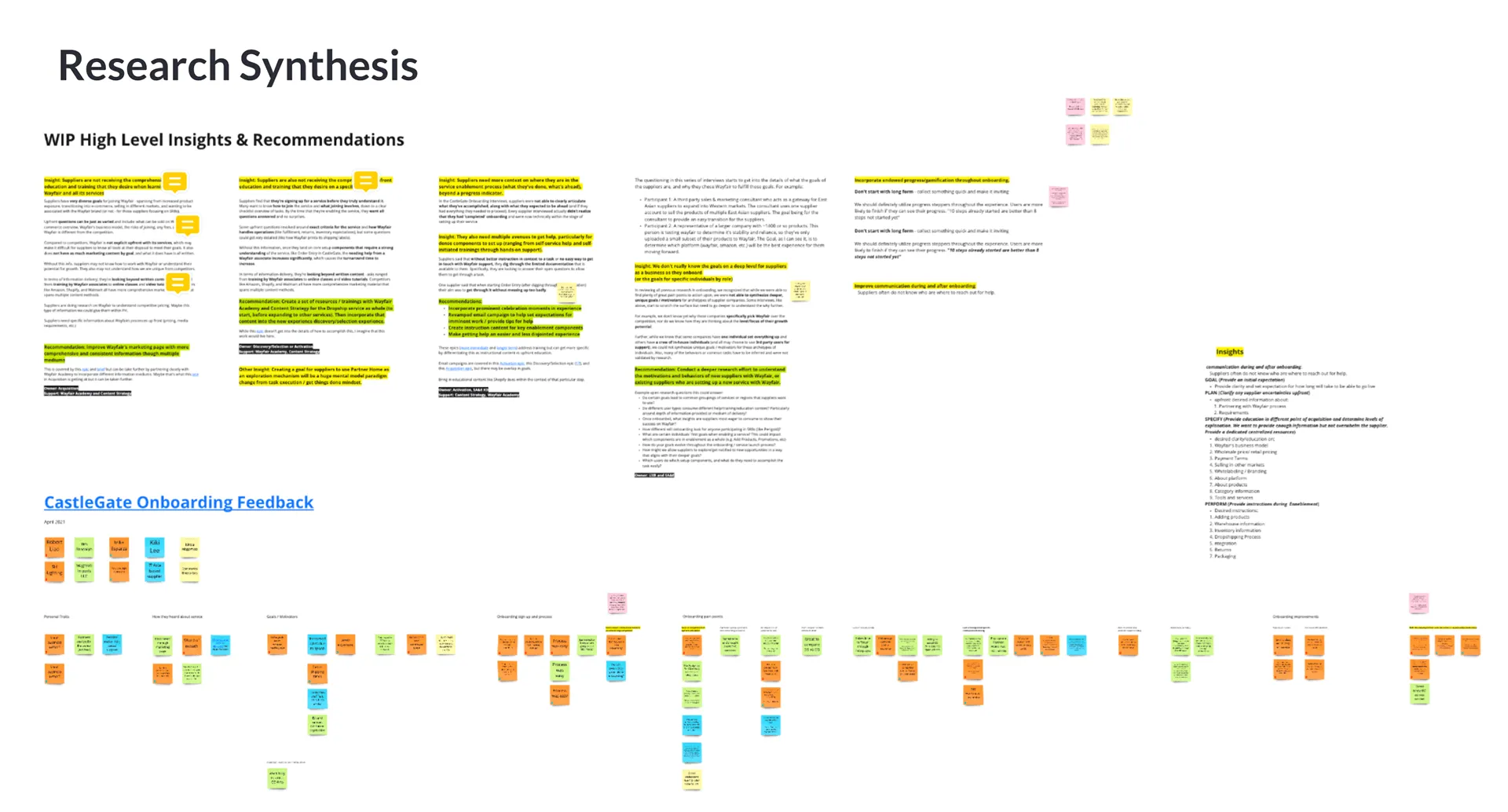
- Reviewed previous research to identify relevant insights for onboarding issues.
- Interviewed suppliers who had just completed onboarding to gather qualitative feedback and understand pain points.
- Interviewed potential suppliers to learn about their expectations and experiences with competitor onboarding flows.
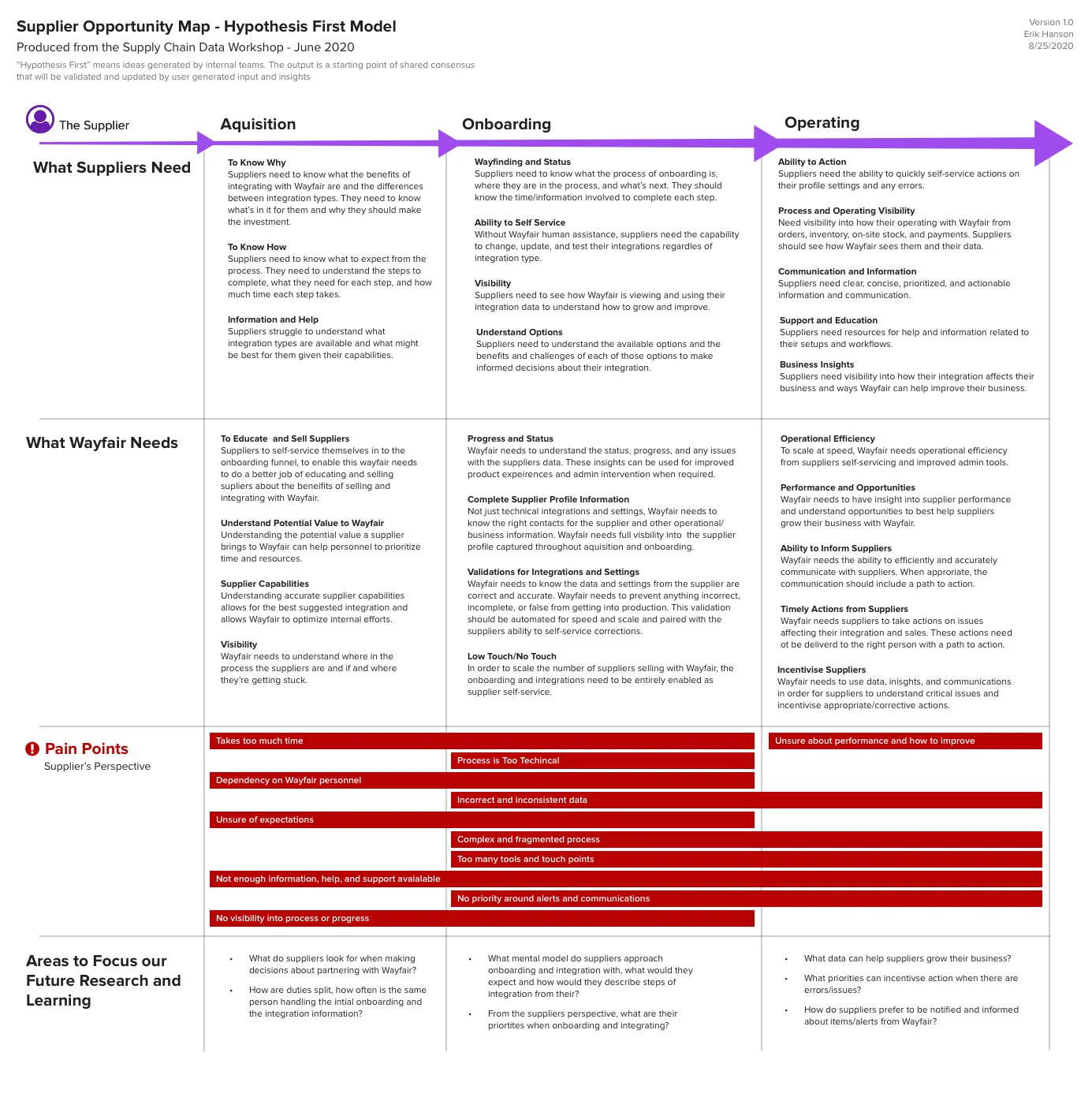
Experience maps and archetypes
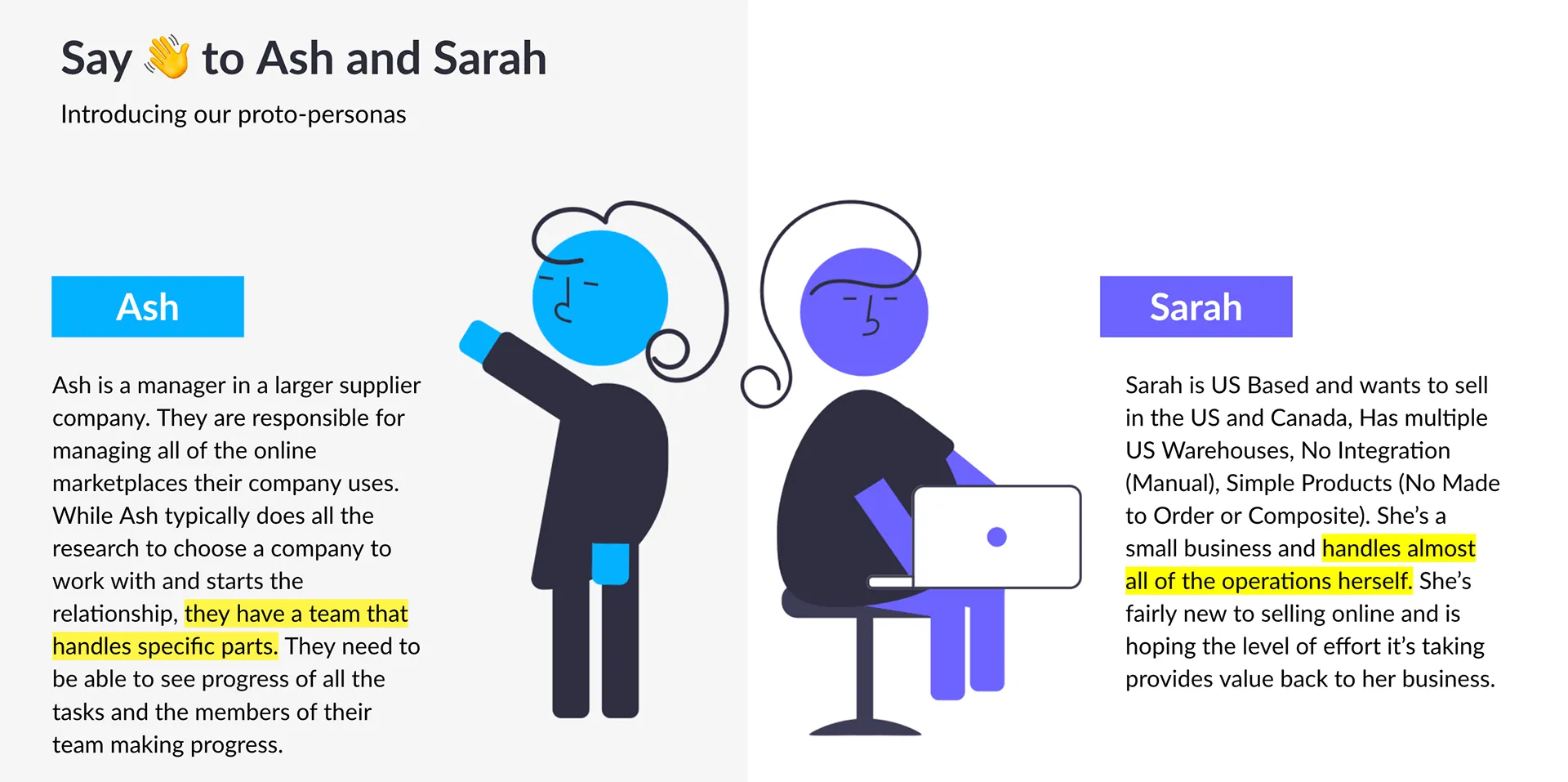
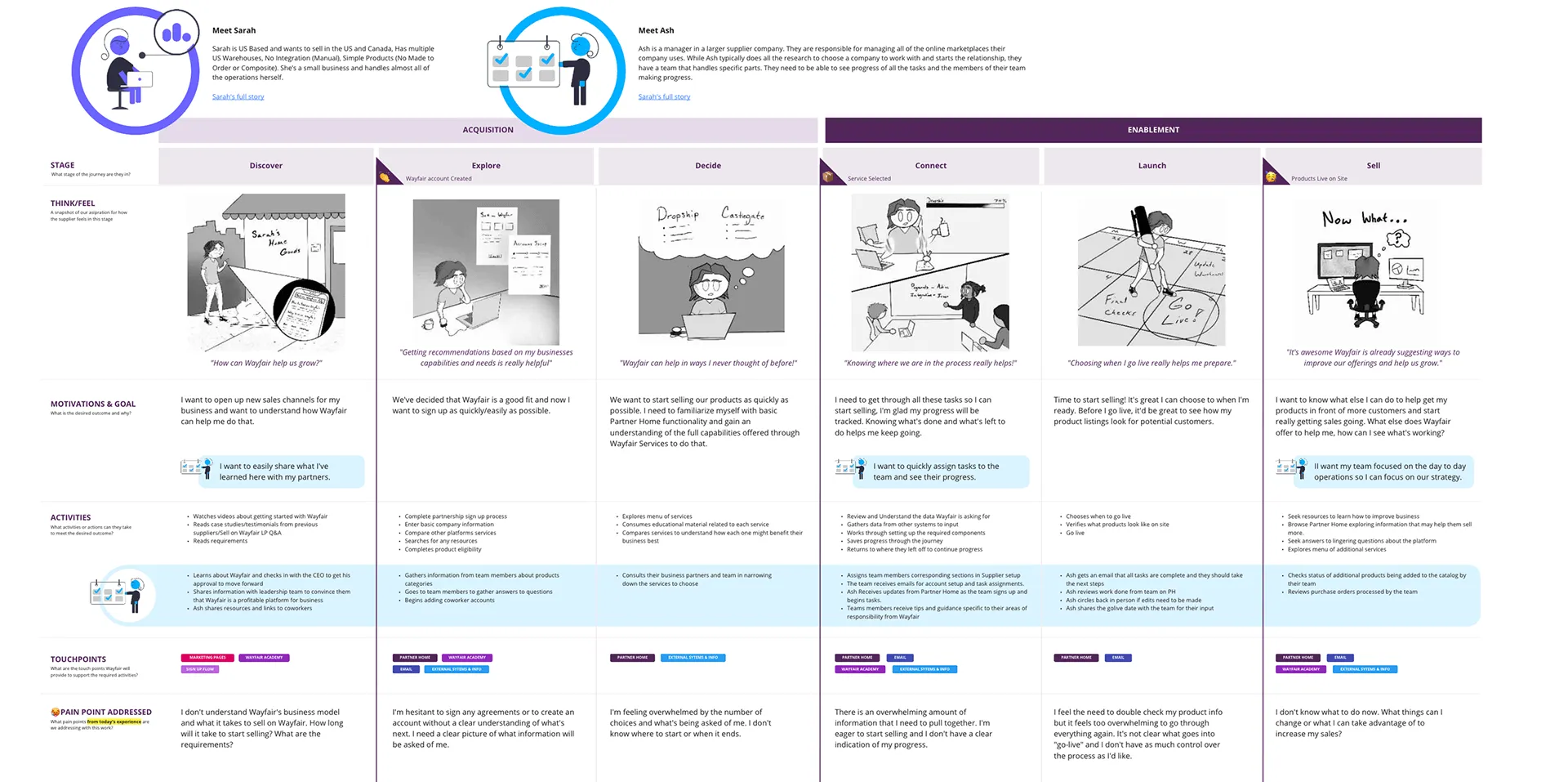
To communicate how the new experience would come to life for other teams and to ground the team’s understanding, we created archetypes and an Experience Map. This map showed where experiences overlapped or diverged and how the design addressed pain points and goals.
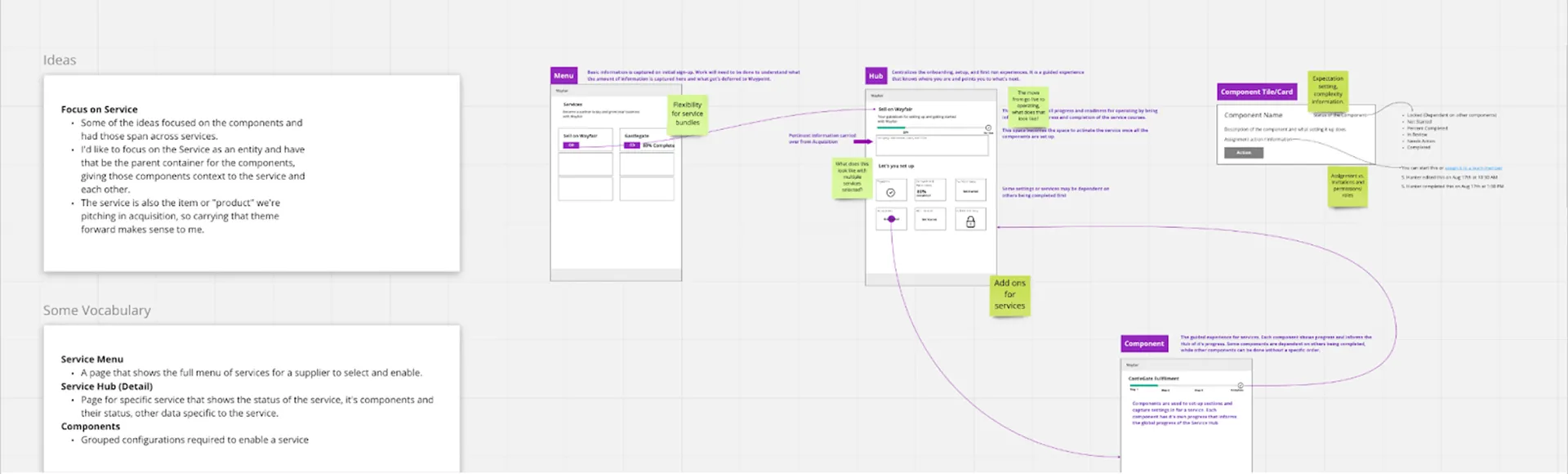
Wireframes and workflows
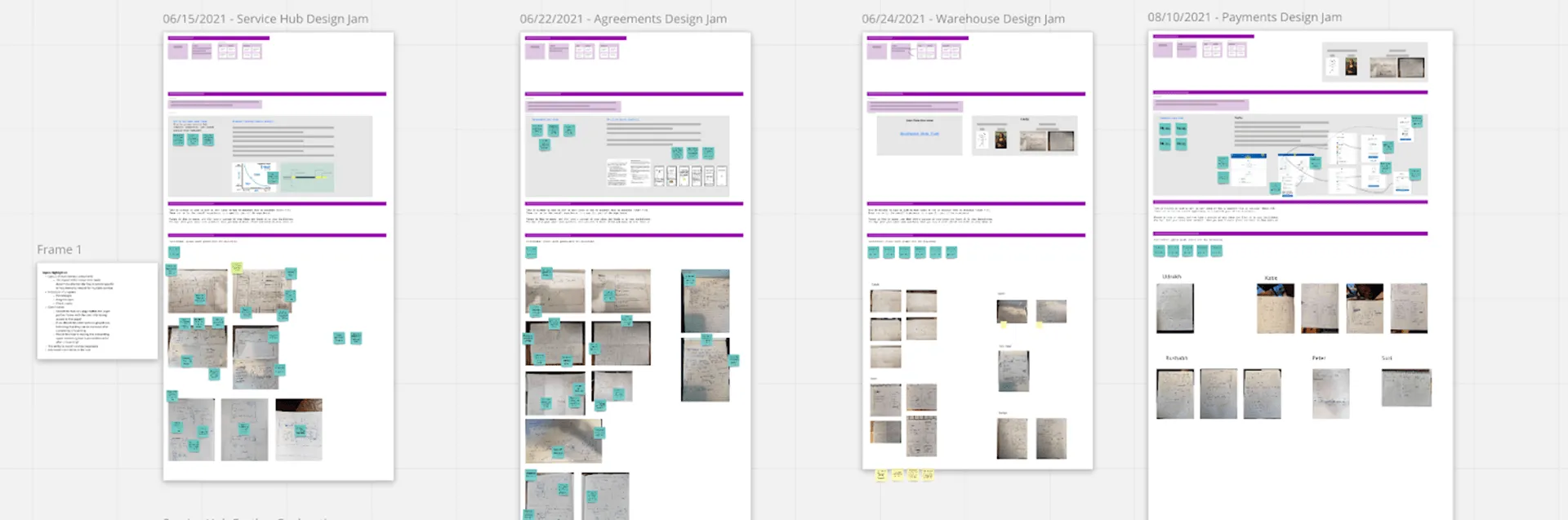
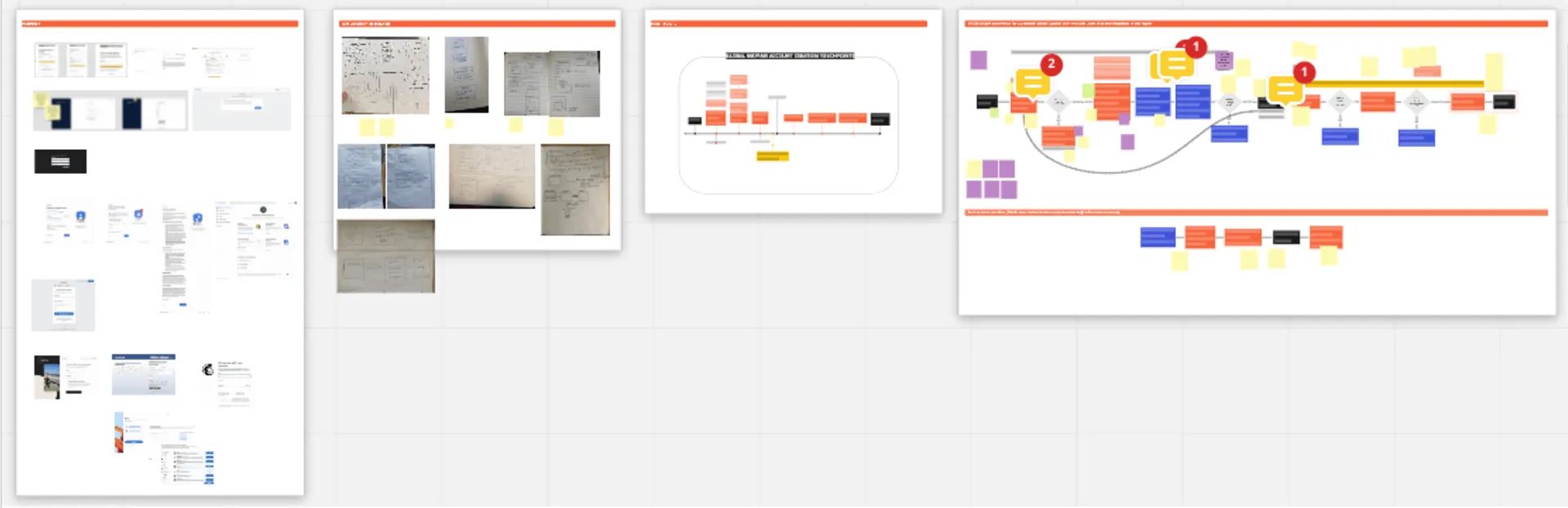
Understanding the supplier journey and the archetypes led to the creation of wireframes and flows for the experience.
As the flows were developed, low-fidelity prototypes were quickly produced to gather feedback from suppliers throughout the process.
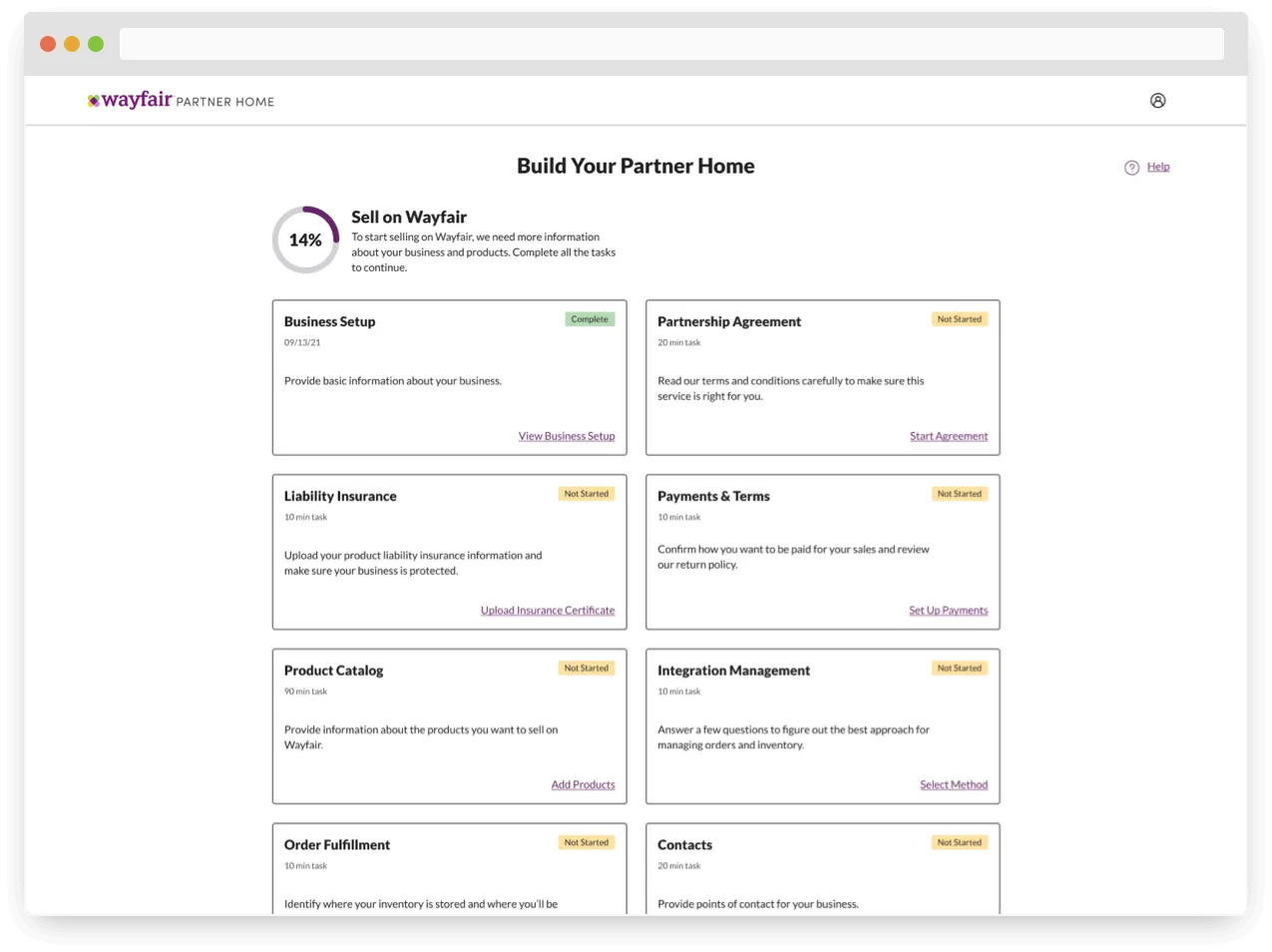
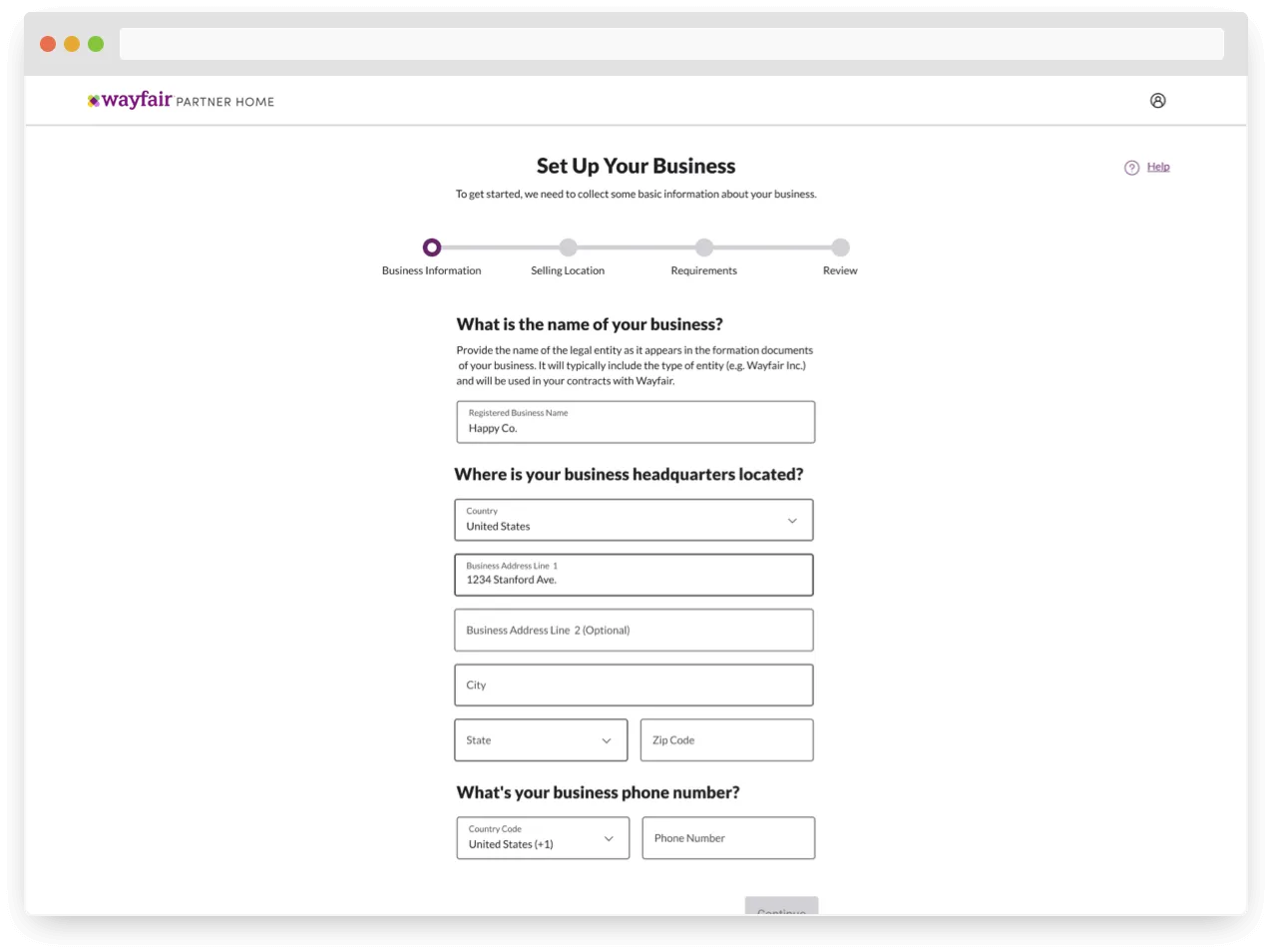
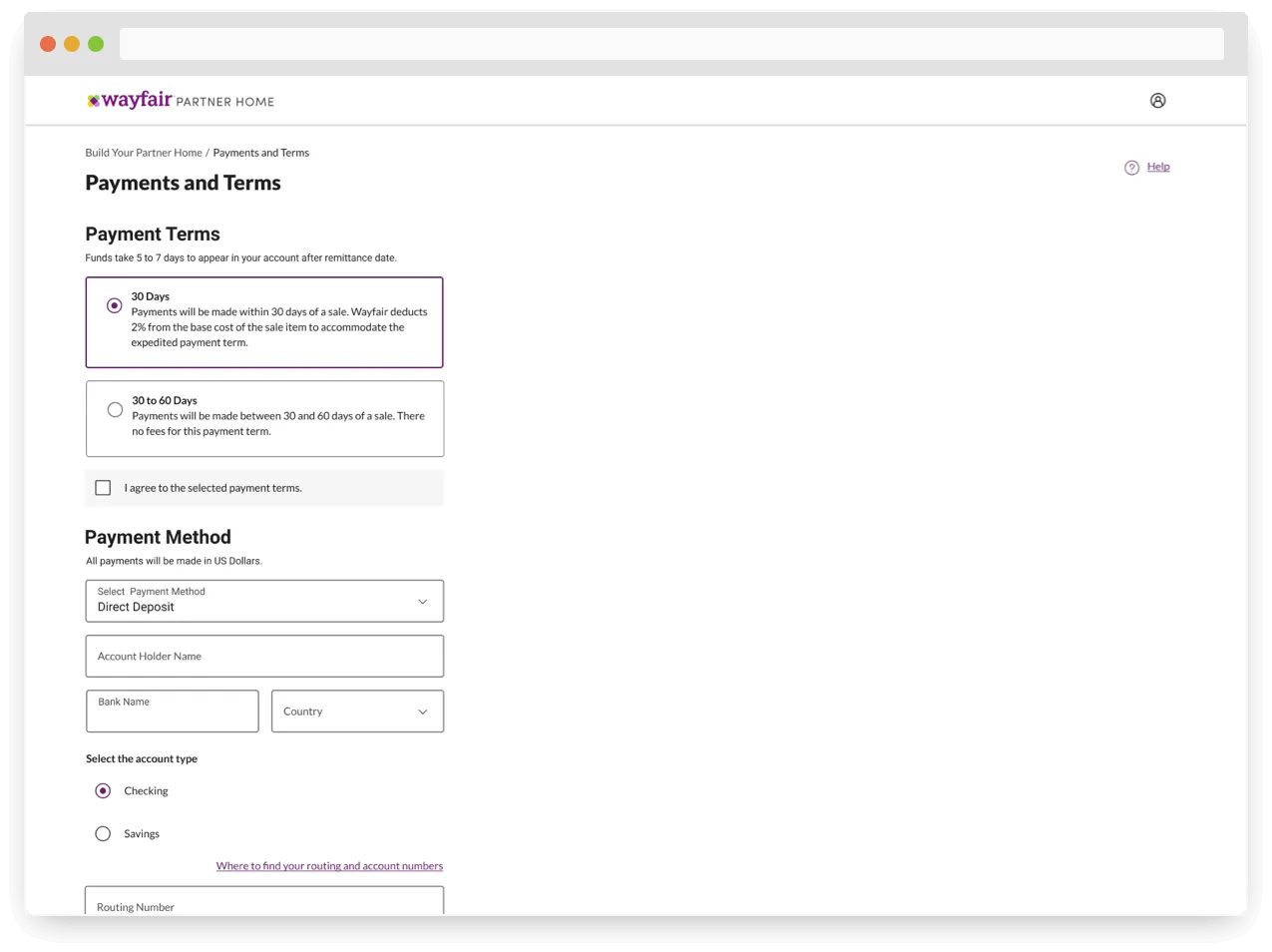
Visual design and screens
The final step was bringing Wayfair’s design system to life within the flows. The supplier onboarding process introduced a number of new patterns and components that were added to the design system for future teams to leverage.
Outcomes
Launching the new experience made it much easier and faster to complete large parts of the flow. Signing contracts, insurance, and setting up payments all happen in minutes through self-service and improved automation. Suppliers reported feeling in control of the process and found the new flows easy to navigate.
- Reduction in time to onboard with Wayfair by 20 days or 58%.
- Cut abandonment rates in half from 37% to 18%.
- Reduced associate hours to support Supplier Onboarding by 80 hours per week.

Hindsight
If given the chance to work through this project again, my main change would be in how the teams were structured and how we collaborated. There were teams outside of our direct organization that had very different priorities and delivery schedules, and we depended on their support. This made it very difficult to affect change in one of the areas identified as most troublesome through our research.